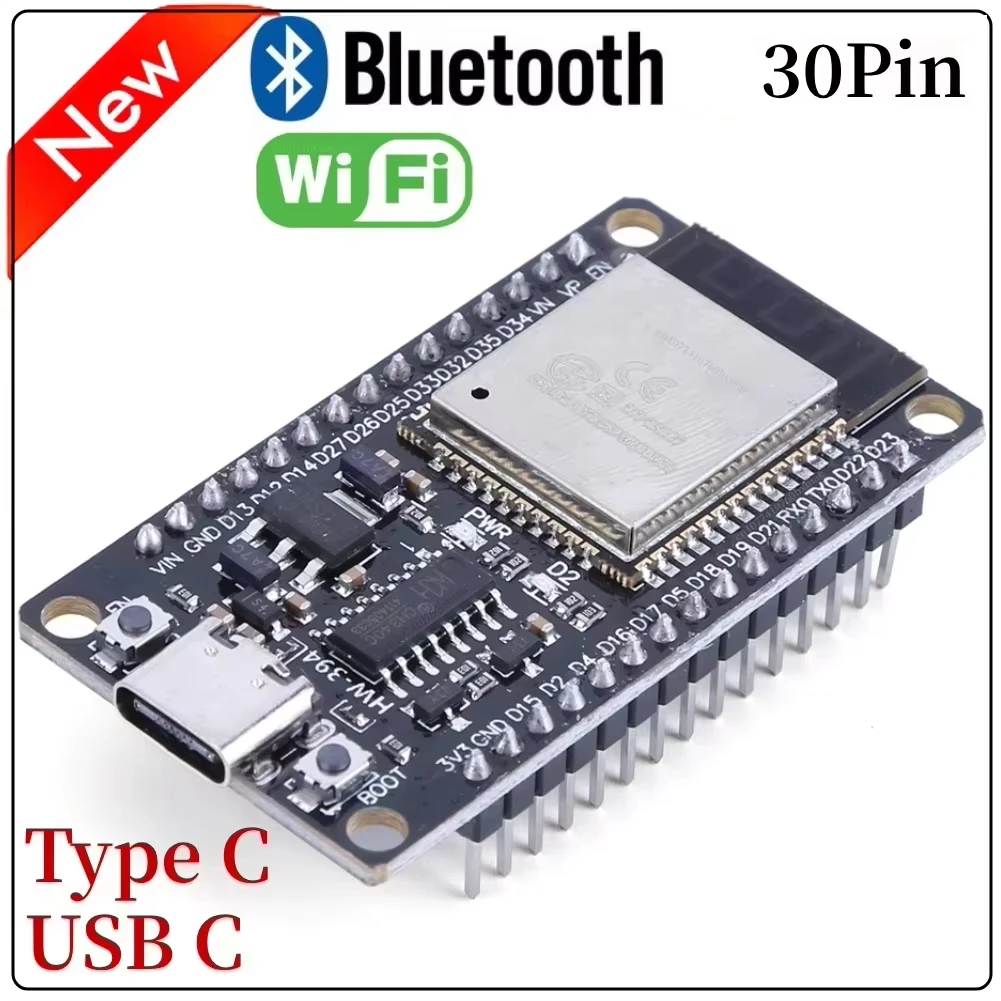
Ever dreamed of building your own smart devices or automating your home without breaking the bank? The **32S Development Board**, a powerful Wireless WiFi Bluetooth module, offers an affordable and versatile platform to bring those smart home and IoT projects to life. This review will dive deep into its features, assess its value, and help you decide if this ultra-low power consumption dual-core board is the right choice for your next project.
Introduction
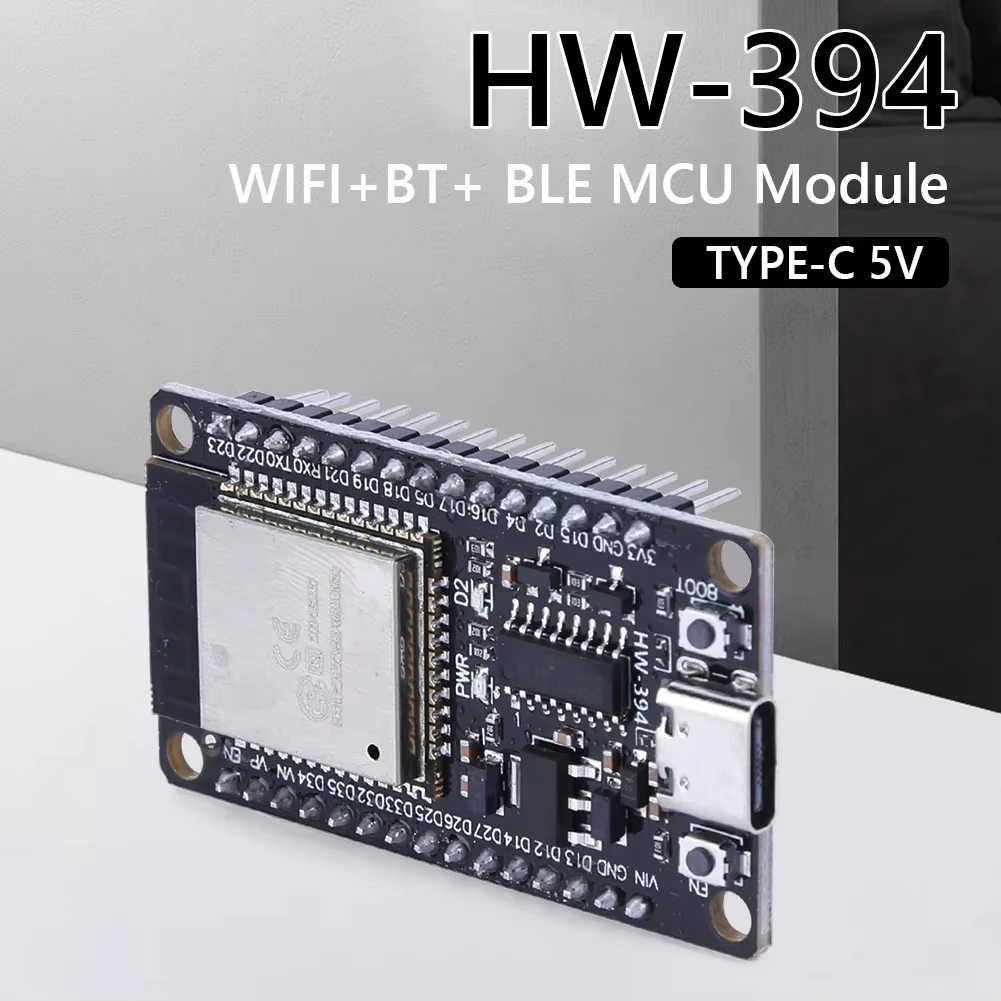
The world of smart homes and the Internet of Things (IoT) is constantly expanding, offering incredible opportunities for customization and automation. At the heart of many innovative projects lies a robust and reliable development board, and the **32S Development Board** has emerged as a standout contender. This compact yet powerful module integrates both Wi-Fi and Bluetooth capabilities, driven by an ultra-low power consumption dual-core processor, making it a favorite among hobbyists, students, and professional developers alike.
Designed specifically for intelligent connectivity, the 32S Development Board offers a comprehensive solution for creating everything from simple sensor networks to complex smart home systems. Its dual-core architecture allows for efficient handling of both communication protocols and application logic, providing a smoother and more responsive user experience. This means you can run your Wi-Fi stack on one core while dedicating the other to process data, control peripherals, or execute complex algorithms, all simultaneously and without significant performance bottlenecks.
What truly sets this particular 32S Development Board apart is its blend of high performance, extensive connectivity options, and an incredibly attractive price point, especially considering its 4.9/5 rating from over 13,000 reviews. It’s a testament to its reliability and the value it provides, empowering users to innovate without a substantial financial commitment. Its integrated Wi-Fi and Bluetooth, combined with ultra-low power consumption, make the 32S Development Board an ideal foundation for a vast array of battery-powered IoT devices and smart home applications.
What We Love

- **Dual-Core Processing Power with Integrated Wi-Fi and Bluetooth**
The 32S Development Board truly shines with its dual-core processor, which dramatically boosts its capability compared to single-core alternatives. This architecture allows developers to assign dedicated tasks to each core; for instance, one core can manage the Wi-Fi and Bluetooth communication stacks, ensuring seamless data transfer and device connectivity, while the other core can focus entirely on executing the main application logic, processing sensor data, or controlling actuators. This parallel processing capability is a game-changer for complex IoT projects where real-time responsiveness and efficient multitasking are crucial. Imagine a smart irrigation system that simultaneously monitors soil moisture, communicates with a central server via Wi-Fi, and receives commands from a smartphone via Bluetooth – the 32S Development Board handles such scenarios with ease. The integrated Wi-Fi (802.11 b/g/n) and Bluetooth (v4.2 BR/EDR and Bluetooth LE) radios mean you don’t need external modules, simplifying design and reducing overall costs, making the 32S Development Board a truly all-in-one solution for wireless connectivity.
- **Exceptional Ultra-Low Power Consumption**
For many IoT and smart home applications, especially those deployed in remote locations or relying on battery power, energy efficiency is paramount. The 32S Development Board excels in this area with its ultra-low power consumption. It features multiple power modes, including a deep sleep mode, which allows the board to consume minimal energy when not actively processing or communicating. In deep sleep, the board can wake up periodically to perform a task (like reading a sensor), transmit data, and then return to sleep, extending battery life from days to months, or even years, depending on the application and battery capacity. This feature makes the 32S Development Board an outstanding choice for projects like remote weather stations, smart door locks, wearable devices, or any other application where power sources are limited. The longevity provided by its power management capabilities translates directly into less maintenance and a more reliable deployment of your smart devices, solidifying the 32S Development Board as a market leader for energy-conscious designs.
- **Unmatched Versatility for Smart Home and IoT Projects**
The 32S Development Board isn’t just a connectivity module; it’s a versatile platform ready for almost any smart home or IoT challenge you can throw at it. Its rich set of peripheral interfaces, including GPIOs, ADC, DAC, I2C, SPI, UART, and more, means it can connect to a vast array of sensors, actuators, and external devices. Whether you’re building a smart lighting system that responds to voice commands, an environmental monitoring station tracking air quality, a home security system with motion detection, or an automated pet feeder, the 32S Development Board provides the necessary hardware backbone. Furthermore, its compatibility with popular development frameworks like the Arduino IDE and MicroPython significantly lowers the barrier to entry, allowing both beginners and experienced developers to quickly prototype and deploy sophisticated applications. This broad compatibility and extensive peripheral support make the 32S Development Board a truly adaptable component for diverse project needs, offering a powerful foundation for innovation.
- **Outstanding Value and Community Support**
At a price point of just $40.20, the 32S Development Board offers an incredible amount of features and performance for its cost. When you consider the integrated dual-core processor, Wi-Fi, Bluetooth, and ultra-low power capabilities, it’s clear why it has garnered such high ratings from thousands of users. This exceptional value makes advanced smart home and IoT development accessible to a wider audience, from students on a budget to hobbyists looking to experiment without a significant investment. Beyond the hardware itself, the ESP32 ecosystem (on which the 32S Development Board is based) boasts a massive, active, and supportive community. This means a wealth of tutorials, forums, example codes, and libraries are readily available online, making troubleshooting easier and accelerating the development process. The robust community support surrounding the 32S Development Board ensures that help is always just a search away, fostering a collaborative environment for learning and project development. The combination of powerful features, low cost, and a thriving community makes the 32S Development Board an unbeatable option for anyone entering the world of connected devices.
What Could Be Better

- **Learning Curve for Absolute Beginners**
While the 32S Development Board is highly versatile and compatible with user-friendly environments like the Arduino IDE, it still presents a learning curve for individuals with absolutely no prior programming or electronics experience. Understanding concepts like GPIO pin assignments, serial communication protocols, and basic C++ or Python (for MicroPython) is essential to unlock its full potential. For someone entirely new to embedded systems, the initial setup, flashing firmware, and writing basic code might feel daunting. Although there’s extensive community support, navigating documentation and debugging code requires a foundational understanding of development principles. It’s not a plug-and-play device for complex tasks like a ready-made smart bulb; it’s a platform for building those devices, meaning a commitment to learning is required to get the most out of the 32S Development Board.
- **Documentation Can Be Inconsistent or Generic from Sellers**
One common challenge with generic development boards sourced from marketplaces like AliExpress is the inconsistency or generality of seller-provided documentation. While the underlying ESP32 chip has excellent official documentation, specific pinout diagrams, schematic differences for various board revisions, or detailed usage examples tailored to *this specific* 32S Development Board might be sparse or poorly translated from individual sellers. This can lead to frustration when trying to identify the correct pins for a particular sensor or understanding subtle differences in board configurations. Users often have to rely on community forums or external resources to find reliable information, which, while abundant, adds an extra step to the development process. Improved, standardized documentation from the seller for this particular 32S Development Board would significantly enhance the user experience and reduce initial setup time.
Who Is It For?

The **32S Development Board** is an excellent choice for a wide range of individuals looking to dive into the world of connected electronics.
It’s perfect for: DIY smart home enthusiasts eager to build custom automation systems beyond off-the-shelf products, IoT project developers needing a powerful yet cost-effective core for prototypes and deployments, and electronics hobbyists and students seeking a versatile platform to learn about microcontrollers, wireless communication, and embedded programming.
Ultimately, if you’re looking for a robust, feature-rich, ultra-low power, and highly affordable development board with excellent Wi-Fi and Bluetooth capabilities, the 32S Development Board is an intelligent investment for your next innovative project.
Frequently Asked Questions
Q.Is the 32S Development Board suitable for commercial products?
While primarily used for prototyping and hobby projects, the underlying ESP32 chip within the 32S Development Board is robust enough for commercial applications. However, transitioning from a generic development board to a commercial product often involves designing custom PCBs, optimizing power delivery, and ensuring compliance with regulatory standards. The 32S Development Board provides an excellent foundation to prove your concept before moving to mass production.
Q.What software or programming languages can I use with the 32S Development Board?
The 32S Development Board is highly versatile regarding software. It’s most commonly programmed using the Arduino IDE with the ESP32 core, which utilizes C++. You can also program it with MicroPython, making it accessible to Python developers. Additionally, advanced users can use the ESP-IDF (Espressif IoT Development Framework) for more granular control, providing a powerful environment for C/C++ development on the 32S Development Board.
Q.How does the ultra-low power consumption of the 32S Development Board benefit my projects?
The ultra-low power consumption feature of the 32S Development Board is crucial for battery-operated projects, enabling them to run for extended periods without needing recharging or battery replacement. This is especially beneficial for remote sensors, smart locks, environmental monitors, or wearables where continuous power is unavailable or inconvenient. It maximizes the operational lifespan of your devices, making them more practical and sustainable in various smart home and IoT applications.
Disclosure: This post contains affiliate links. We may earn a commission at no extra cost to you.
- Non-Yellowing Transparent Case For iPhone 16 15 14 Plus 13 Pro Max 16e 12 11 12Pro 14Pro 13Pro SE 2020 Phone Cover Case
- Hot Brand Lemontini Phone Case for IPhone 11 12 13 14 15 16 Pro Max Plus 17 Air Makeup Lip Gloss Silicone Cover with Li
- HOMEFISH Tassel Small Messenger Bag For Women Trend Lingge Embroidery Camera Female Shoulder Bag Fashion Chain Crossbody
* This post contains affiliate links. We may earn a commission at no extra cost to you.